Contents
Dietary Fat
 ✨ AI
Essential for hormones, cell walls, and absorbing vitamins. Most energy-dense: about 9 kcal per gram.
Fat is essential: it stores energy, cushions organs, builds cell membranes, and lets your body absorb the fat-soluble vitamins A, D, E, and K. Because it's energy-dense (9 kcal/g), a little goes a long way.
What is Dietary Fat?
Fat is essential: it stores energy, cushions organs, builds cell membranes, and lets your body absorb the fat-soluble vitamins A, D, E, and K. Because it's energy-dense (9 kcal/g), a little goes a long way.
Why Dietary Fat matters
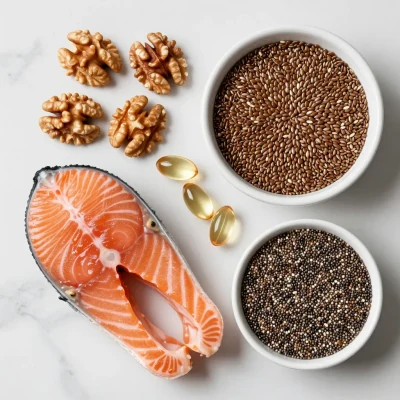
The type matters more than the total. Unsaturated fats (olive oil, nuts, seeds, avocado, and fish) support heart health. Saturated fat (fatty meat, butter, coconut/palm oil) is best limited, and industrial trans fats should be avoided entirely.
Best sources of Dietary Fat
- Olive oil
- Nuts & seeds
- Avocado
- Salmon & sardines
- Nut butters
Practical tips
A practical move: replace some saturated fat with unsaturated sources rather than swapping fat for refined carbs.
References
FAQ
What is Dietary Fat?
Essential for hormones, cell walls, and absorbing vitamins. Most energy-dense: about 9 kcal per gram.
Why is Dietary Fat important?
The type matters more than the total. Unsaturated fats (olive oil, nuts, seeds, avocado, and fish) support heart health. Saturated fat (fatty meat, butter, coconut/palm oil) is best limited, and industrial trans fats should be avoided entirely.
What are the best food sources of Dietary Fat?
Olive oil, Nuts & seeds, Avocado, Salmon & sardines, Nut butters.
Any practical tips?
A practical move: replace some saturated fat with unsaturated sources rather than swapping fat for refined carbs.