Nutrition Facts & Guides
Evidence-based nutrition guides covering calories, macros, vitamins, minerals, and more. Learn what your body needs each day and which foods deliver it.
Nutrition Basics

Calories & Energy
A calorie is a unit of energy your body spends to breathe, move, and think, and takes in from food. Learn how calories work and how many you need each day.

Macronutrients
Macronutrients are the big three nutrients you need in large amounts for energy: protein, carbs, and fat. Learn what each does and how to balance them.

Micronutrients
Micronutrients are the vitamins and minerals you need in tiny amounts that keep nearly everything in your body running. Learn the main groups and sources.
Macronutrients

Protein
Learn how protein supports muscle repair, enzymes, and overall health, how much you need each day, and which foods offer high-quality protein for meals.

Carbohydrates
Carbohydrates are the body's main fuel, especially for the brain and muscles, at about 4 kcal per gram. Learn the types, sources, and how much you need.

Dietary Fat
Fat is essential for hormones, cell walls, and absorbing vitamins, and it's the most energy-dense nutrient at about 9 kcal per gram. Learn the types.

Fiber
Fiber is the part of plant carbs you don't digest. It feeds your gut, steadies blood sugar, and keeps you full. Learn soluble vs insoluble types.

Sugar & Added Sugars
Learn how natural and added sugars affect energy and health, recommended daily limits, label-reading tips, and practical ways to reduce added sugar intake.
Micronutrients

Vitamins
Vitamins are organic micronutrients (A, C, D, E, K, and the B group) that keep countless body processes running. Learn what each does and top sources.
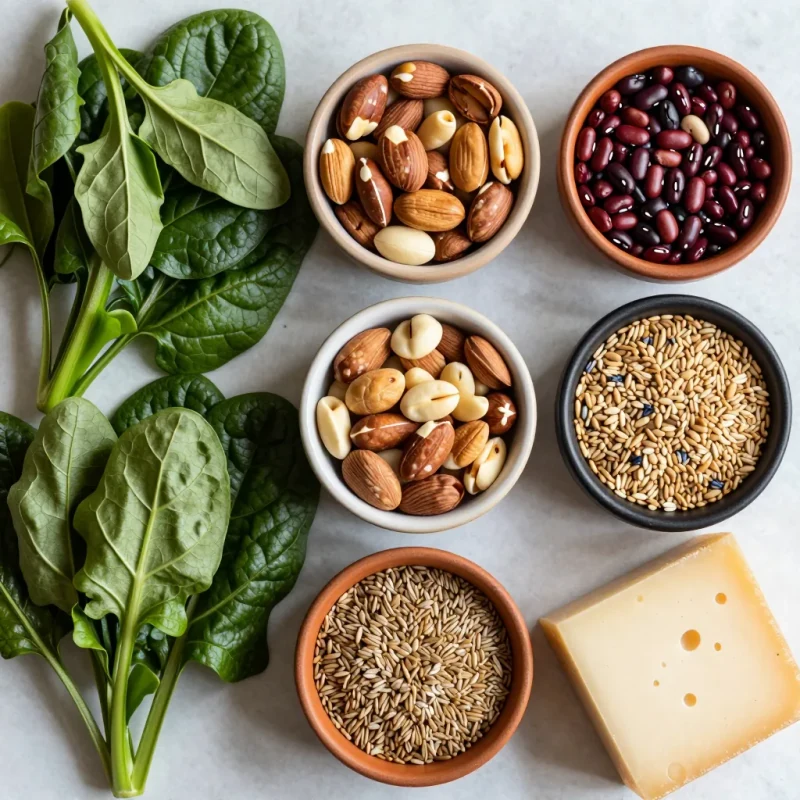
Minerals
Minerals are inorganic nutrients like calcium, iron, potassium, and magnesium that support bones, blood, and nerves. Learn what each does and top sources.

Sodium & Salt
Sodium is an essential electrolyte for fluid balance and nerves, yet most people eat too much, mostly from processed food. See how much you really need.

Iron
Iron is the mineral that carries oxygen in your blood, and low iron is among the most common deficiencies. Learn sources, needs, and signs of a shortfall.

Calcium
Learn why calcium supports bones, teeth, muscles, nerves, and heart rhythm, how much you need each day, and which foods provide the most dietary calcium.

Vitamin D
Vitamin D, the "sunshine vitamin," helps you absorb calcium and keeps bones and immunity strong. Learn food sources, sunlight, and how much you need daily.

Omega-3 Fats
Omega-3s (EPA, DHA, and ALA) are essential fats linked to heart and brain health your body can't make. Learn the best food sources and how much to eat.